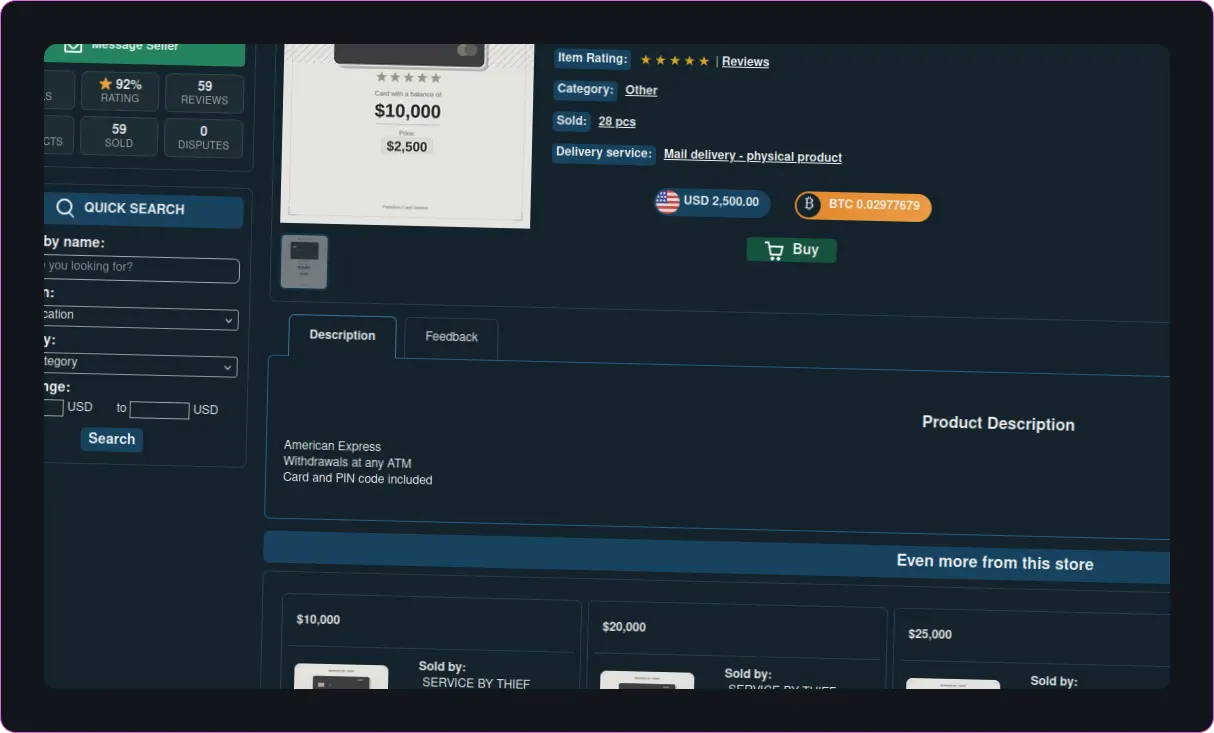
The 72-Hour Fall of Mark T.: A Cautionary ATM Skimming Tale
Mark T. from Tampa Bay bought six cloned debit cards on a darknet marketplace for $480 in Monero only to find himself identified by an ATM camera and sentenced to five years in federal prison within w
- Published:
- Revised: Oct 25, 2026
- Written by: Liam Hawthorne
Exploring the dark and deep web often reveals tools and services that promise quick gains yet carry hidden risks that surface in the physical world. One such case demonstrates how a seemingly straightforward purchase of cloned cards led directly to arrest through everyday banking infrastructure. The chain of evidence began with magnetic stripe data and ended in a courtroom, showing that anonymity tools have practical limits when ATMs collect high-resolution footage and transaction logs align with digital trails.
This incident from November 2024 highlights the speed at which fraud detection systems operate and how physical evidence overrides cryptocurrency privacy features. Buyers frequently overlook the transition from online acquisition to cash withdrawal, a moment when digital crime meets real-world surveillance. The outcome underscores that even careful selection of privacy-focused coins cannot erase facial recognition matches or seized hardware.
1. The mechanics behind cloned card operations
Carding remains a persistent form of cybercrime, capitalising on the disconnect between data theft and the ability to access cash. Criminals initiate this process by capturing magnetic track data through various methods, subsequently encoding that information onto blank plastic cards. Once a buyer obtains this data, the card is embossed to resemble a legitimate banking product.
A complete set usually consists of card details along with a PIN, which is commonly obtained through hidden cameras or overlay keypads at ATMs. This allows for immediate cash withdrawals until the account holder or the bank detects any inconsistencies. After the cash is taken, the stolen money is often converted into cryptocurrency through local exchanges to obscure its source.
An individual named Mark T., who is 34 years old and resides in Tampa Bay, Florida, exemplifies this method. In November 2024, he made a purchase amounting to $480 in cryptocurrency for six cloned debit cards embedded with stolen track data. The first three ATMs he accessed dispensed a total of $4,200 without incident. His success, however, was halted at the fourth ATM, where surveillance cameras recorded clear footage that ultimately led to his identification. This sequence of events is not unique; many engage in similar ventures, yet the results differ primarily when they overlook the recording capabilities inherent in every ATM.
In practice, the entire cycle from card acquisition to cash withdrawal can transpire within a fortnight. This shortened duration can serve as a signal for detection algorithms that identify patterns. Therefore, understanding that each ATM operates as both a cash dispenser and a means of forensic collection is crucial for credit card skimming protection. Individuals aiming to check for potential credit card skimmers should inspect the card slot for any unusual thickness or extra overlays before completing a transaction. A straightforward visual check, combined with a firm tug on the reader, often uncovers tampering that might be missed by basic inspection tools.
Effective protection against credit card skimming requires a combination of technology and behavioural vigilance. Opting for ATMs located in bank lobbies rather than isolated street corners diminishes risk, as these machines typically receive more regular maintenance and are equipped with higher-quality cameras. This practice can be likened to performing a quick check on tyre pressure before embarking on a long journey: a brief habit that can prevent significant issues down the line. When practised consistently, this strategy provides practical protection against card skimming without necessitating specialised tools.
While there are devices available that claim to protect against card skimming, they only mitigate part of the risk. Monitoring account activity on a daily basis and reporting any irregularities within hours proves far more effective. By doing so, banks can freeze the compromised account before further damage occurs. Tools designed to detect skimming devices can assist at the physical level, but they cannot replace the need for vigilance once a cloned card has been utilised. Recognising signs of a skimming device involves looking for colour mismatches, loose parts, or unfamiliar branding around the card insertion area. These indicators are more prevalent than many might think and warrant immediate attention.
2. Surveillance capabilities inside modern cash machines
Every contemporary ATM operates as an advanced surveillance device, transcending its basic role of dispensing cash. These machines are fitted with high-definition cameras that record at a resolution of 1080p, specifically focusing on the user and employing infrared technology to function effectively in dim environments. Additionally, numerous models include a second hidden camera designed to capture images from an alternative perspective, thereby reducing blind spots. Comprehensive logs keep track of the exact timing, transaction details, card information, and machine identification, while geolocation and network data further strengthen the audit trail.
In a case involving Mark at the ATM positioned in a Tampa Bay suburb, the main camera captured his face distinctly, with no effort to hide his identity. A short video clip of just twenty-three seconds was adequate for identification through a database match. This situation demonstrates that the anonymity provided by darknet platforms vanishes the instant a physical transaction takes place; ATMs act as conduits that transform online intentions into easily traceable actions almost instantly.
Identifying card skimmers requires more than just inspecting the card reader; it also involves assessing the surrounding area. Observing whether the ATM is positioned in a well-monitored and busy environment or in a more isolated location can indicate potential dangers. Security websites frequently share photographs of skimming devices, showcasing common tampering methods that are found across various locations. Recognising these patterns equips users to avoid compromised machines before inserting their cards.
To effectively guard against credit card skimming, it is crucial to treat every withdrawal as a recorded incident. Not concealing one’s face with masks, glasses, or hats establishes a clear link to state driver's licence databases for law enforcement. This approach is supported by discussions on platforms like Reddit, where users often share images of tampered readers while neglecting the important role of facial recognition. In real-world applications, the camera typically yields vital evidence, even when other security measures appear to be in place.
3. Chronology of the investigation and evidence chain
The inquiry progressed swiftly, showcasing the capabilities of modern fraud detection mechanisms. On 1 November 2024, three persons hailing from Florida, Georgia, and North Carolina alerted their respective banks regarding suspicious transactions. In response, the banks promptly froze the impacted accounts and communicated the incidents to centralised fraud alert systems.
By the third day, banking algorithms detected an alarming trend of swift withdrawals linked to cloned cards being utilised across state borders. This irregularity triggered an immediate response, leading the bank's investigative team to launch a comprehensive investigation. Two days later, the case was transferred to federal authorities, specifically the U.S. Secret Service, tasked with handling financial crime cases.
On the eighth day, investigators reviewed CCTV footage from ATMs, obtaining a clear image of the suspect. This visual proof was matched against the state's driver's license database, leading to the identification of Mark T., who had no previous criminal history. Additionally, the analysis of the transactions indicated that all suspicious withdrawals took place within a 40-mile radius of Mark's home, thereby strengthening the accusations against him.
Twelve days into the inquiry, law enforcement obtained warrants to investigate Mark's online behavior, including his browsing history and records from his Internet Service Provider. The ISP verified that Mark had accessed Tor exit nodes during the time of the fraudulent activities. Following a court order aimed at the cryptocurrency exchange where Mark acquired Monero, investigators revealed his identity and transaction information. The exchange also provided additional metadata upon legal request.
On day fourteen, a search warrant executed at Mark's home yielded a considerable amount of evidence, including six unmarked plastic cards, a device designed for reading and writing magnetic stripes, a laptop indicating use of the Tor Browser, and $3,200 in cash corresponding to the denominations withdrawn from ATMs. The next day, Mark was arrested. During interrogation, he admitted to acquiring the cards and successfully cashing four of them, while the other two had been disabled by the bank.
The tangible evidence collected during the search was directly linked to the magnetic tracks of the three victims. This strong evidence, along with video recordings and timing discrepancies, rendered any attempts to hide cryptocurrency transactions ineffective. Discussions on card skimming techniques often highlight these specific vulnerabilities. Yet, repeated occurrences demonstrate that theoretical knowledge may not translate into practical caution in real-life situations.
Discussions about credit card cloning often emerge on various dark web forums; however, the practical execution presents difficulties once cloned cards are used at ATMs. These conversations consistently highlight the warnings that Mark appeared to ignore, particularly regarding the geographical clustering of transactions and the lack of any physical disguise. This case serves as a clear reminder of the necessity for vigilance and caution in the digital space, especially when participating in illegal activities.
4. Critical errors that accelerated identification
Mark made several preventable errors that significantly shortened the period from withdrawal to apprehension. All four successful transactions took place within a forty-mile radius of his residence. Anti-fraud systems promptly flag such geographical clustering as suspicious. Distributing actions over broader distances and extended timeframes could have delayed detection, although surveillance cameras would still have captured each visit.
The complete lack of any facial disguise provided a high-resolution image directly to law enforcement databases. It is crucial to understand the importance of obscuring identity during transactions, as neglecting this aspect undermines earlier precautions. Acquiring Monero through a KYC-compliant exchange established a lasting identity connection that investigators traced, despite the coin's intended privacy features. The timing, transaction amount, and subsequent dealings on the darknet marketplace were too closely aligned to dismiss.
Keeping all elements of the operation within his apartment transformed the location into a critical vulnerability. The laptop retained traces of Tor usage, the MSR device had corresponding tracking data, and the cash matched precisely with ATM withdrawals. Digital remnants frequently survive deletion attempts, as operating system logs and browser histories remain intact. The cash stored at home further supported the accusations once it was confiscated.
The entire sequence of events unfolded within a fortnight. This rapid progression activated scoring models before any manual scrutiny took place. Had the activities occurred over several months, initial alerts might have been less intense, though accumulated video evidence would still have been present. Each of these actions demonstrates that protection against credit card skimming must consider both digital and physical vulnerabilities concurrently.
Devices designed to protect against card skimming cannot offset inadequate operational security. Thus, effective credit card skimming protection necessitates consistent habits over reliance on singular tools. When individuals regard every cash machine as a potential evidence-collecting site, the chances of replicating Mark's path diminish significantly. This case also illustrates that advice from Reddit regarding cloned cards about avoiding local clusters warrants serious consideration rather than casual acknowledgment.
Court records later confirmed details obtained from the website where the purchase was made once legal orders compelled disclosure of transaction metadata.
5. Why cryptocurrency failed to provide cover
Monero was selected precisely because of its obfuscation features yet the trail remained intact. The weak link lay at the entry point where Mark completed KYC verification on a centralised exchange by uploading passport details and a selfie. Court orders compelled that platform to disclose both identity and precise transaction data. Although subsequent Monero movements proved hard to follow the initial purchase timestamp and amount matched the darknet marketplace order exactly.
Timing correlations across the entire chain added weight. Monero acquisition, marketplace purchase, parcel receipt and ATM withdrawals all occurred inside a fourteen-day window. Such tight clustering functions as strong circumstantial evidence even without perfect blockchain visibility. Physical finds during the search provided direct confirmation that no amount of mixing could erase.
The seized cards carried magnetic stripe data matching victim dumps while the video placed Mark at specific machines at exact recorded times. These elements together created an unbroken chain from virtual purchase to physical cash-out. Credit card skimming device detector tools might prevent initial data theft but offer no defence once stolen tracks have been monetised.
In everyday terms the situation resembles buying a locked bicycle with a high-security chain yet leaving the key visibly taped to the frame. The sophisticated lock becomes irrelevant when basic operational errors expose the owner. Carding forums dark web participants often discuss these exact failure modes yet enforcement statistics show the lessons are rarely internalised at scale.
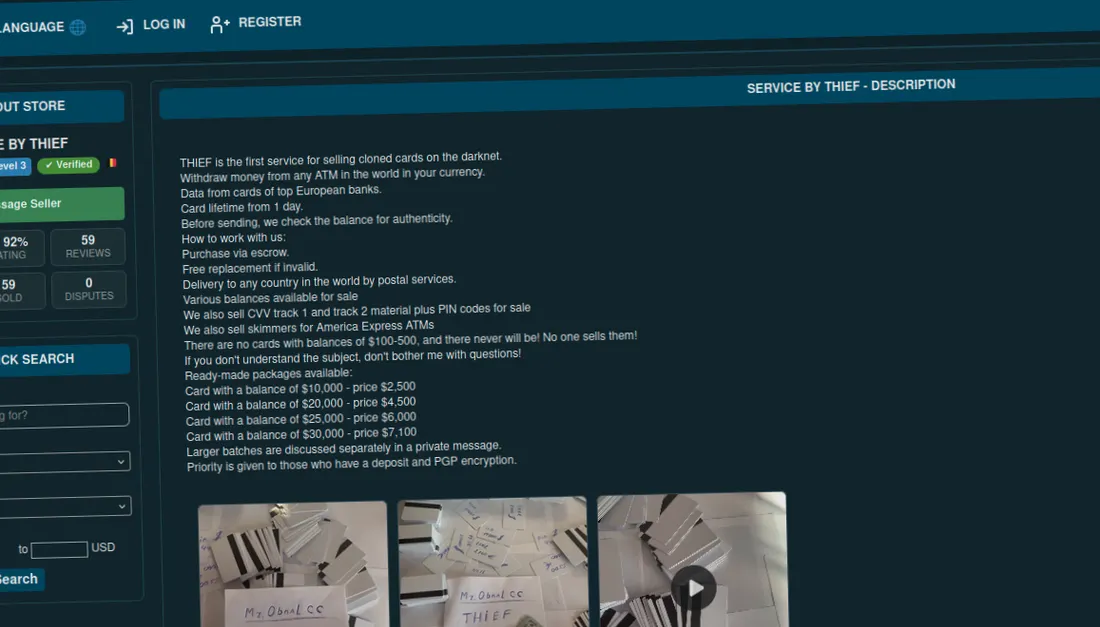
6. Practical takeaways for those operating in hidden markets
The example illustrates that anti-fraud systems employed by banks identify irregularities more swiftly than anticipated by many users. Machine learning algorithms that assess aspects such as transaction speed, geographic location, and device usage generate alerts prior to the involvement of human analysts. Continued investment in these technologies reduces the timeframe available for the utilisation of cloned cards.
The interplay between physical and digital evidence is significant. A single clear frame from an ATM video becomes considerably more effective when paired with detailed transaction records, pinpointing the exact moment to investigate. Merging these types of data creates a robust basis for prompt identifications. Methods for detecting credit card skimmers at the point of service thus enhance rather than substitute existing detection strategies.
Cryptocurrencies that claim to be anonymous still rely on traditional fiat gateways and physical exit points. Know Your Customer (KYC) protocols at both ends establish ongoing connections that law enforcement can leverage. Until these critical junctions are eliminated, a complete detachment between digital and physical identities is unattainable. Therefore, measures against card skimming must recognise these inevitable links.
Educating victims can significantly lower total financial losses since quicker reporting allows for swifter card deactivation. When users monitor their account balances regularly and report any suspicious activities within hours, the effective life span of cloned cards is drastically reduced. This proactive approach directly constrains the extent of individual fraudulent operations.
The last link in the carding scheme faces the greatest physical danger. Organisers positioned further back in the chain often remain hidden, while buyers are exposed to surveillance cameras, geolocation data, and confiscated devices. This disparity highlights why law enforcement prioritises visible participants, despite larger networks continuing to function. Recognising this situation promotes more cautious management of any accessed devices.
Final verdict and lasting implications
Mark T. acknowledged his wrongdoing in March 2025 regarding breaches of 18 U.S.C. § 1029, which relates to fraud involving access devices, as well as violations under 18 U.S.C. § 1957 tied to money laundering. The U.S. District Court for the Middle District of Florida sentenced him to 60 months of imprisonment. In addition, he received a three-year period of supervised release, a fine of $22,000, and was mandated to compensate three victims. The presiding judge remarked on Mark’s role, indicating that although he was not the mastermind behind the fraudulent activities, he held a significant position as the final link, facing the full impact of the operation's fallout.
This incident highlights a crucial truth: the allure of the darknet does not exempt individuals from real-life repercussions. Every transaction executed with a counterfeit card ultimately interacts with monitoring systems that transform anonymity into discernible evidence. Adequate defence against card skimming necessitates a combination of technological insight and stringent operational procedures, a reality often overlooked until legal troubles arise.
Individuals utilising concealed services must regard ATM transactions as permanently documented activities rather than fleeting opportunities. It is important to recognise that the strategies employed against credit card skimming represent merely a fraction of a comprehensive evidence framework, which is essential for maintaining an informed view on potential risks. The particulars of this case—four withdrawals totalling $4,900, an expenditure of $480 just fifteen days before the arrest, and a 60-month prison sentence—serve as potent reminders that immediate rewards can frequently lead to considerable long-term consequences.
FAQ
What is the fastest way law enforcement linked Mark to the cloned card purchases?
ATM cameras captured a clear undisguised facial image that matched Florida driver licence records within days. This visual evidence combined with geolocation data confined to a forty-mile radius around his home allowed rapid identification before deeper digital analysis even began.
Why did paying with Monero fail to protect the buyer in this instance?
The Monero was acquired through a centralised exchange that required KYC verification with passport and selfie. Court orders obtained the identity linked to the exact purchase amount and date, creating an unbreakable connection to the subsequent darknet marketplace transaction despite the coin’s privacy features.
How can someone apply credit card skimming protection when using cash machines?
Begin by inspecting the card slot for overlays or unusual thickness, then tug firmly to detect tampering. Prefer lobby machines over isolated units, avoid any predictable geographic pattern, and monitor accounts daily so banks can freeze compromised cards quickly. These steps form practical credit card skimmer protection without specialised hardware.
What physical evidence proved most damaging during the search of Mark’s apartment?
Investigators seized blank cards with matching magnetic tracks, an MSR device, a laptop retaining Tor and marketplace artefacts, and $3,200 in cash whose denominations exactly matched ATM dispensations. This combination of items provided direct physical proof that cryptocurrency trails could not obscure.